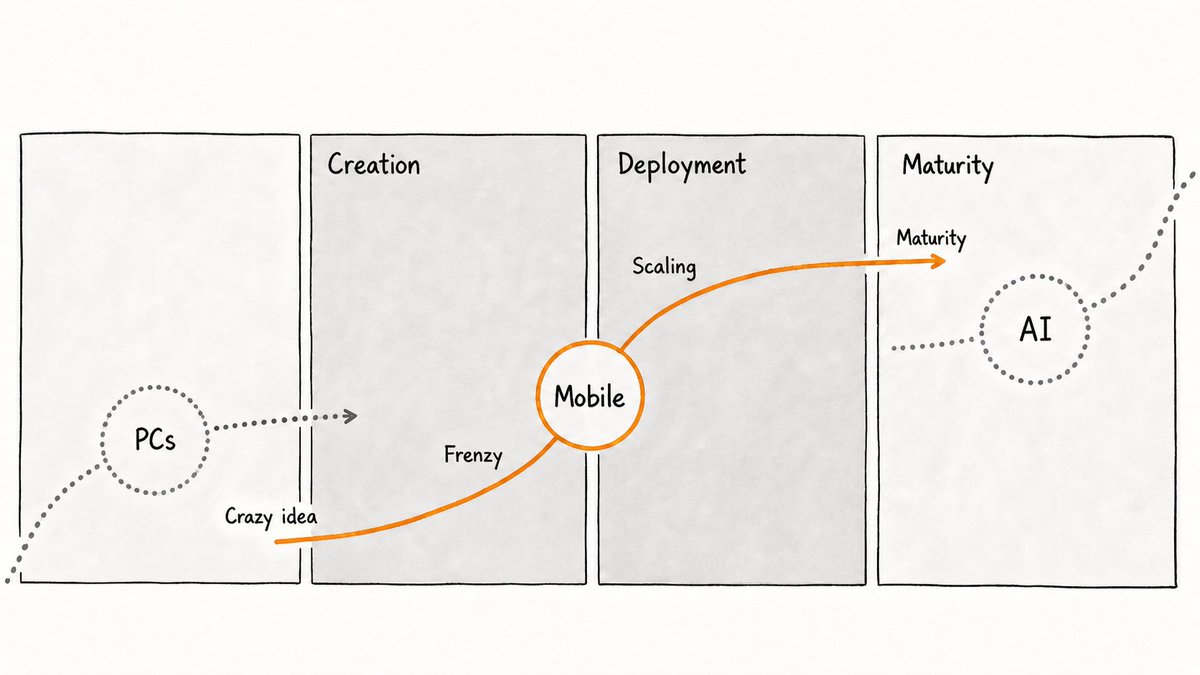
I used to get paid to predict the future for the CEO of Google. It was my job on the M&A team to study where technology was going before it was obvious so Google could allocate billions of dollars of resources accordingly. I met tiny startups like Scale AI before they became big, watched markets form before they had names, and tried to understand which shifts were real and which were just noise. I was there to see the last AI hype cycle of 2014 as it boomed and busted. I even helped Google get a ChatGPT-like messaging app & assistant product off the ground and later started an accelerator where I gave talks on “How to think about the future” to hundreds of founders. This AI cycle is certainly different. It’s an Intelligence Revolution.
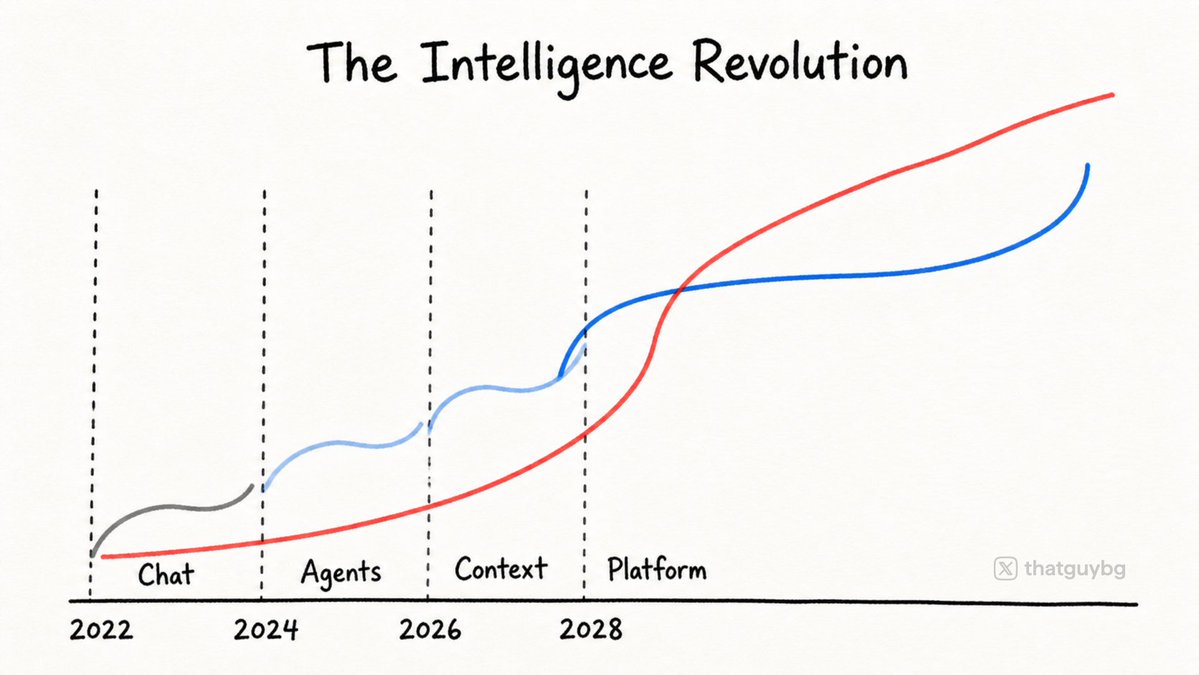
Revolutions always feel chaotic while you are inside them and many bet their careers and businesses on a myopic view of how they play out. But every revolution follows the same pattern. It’s a pattern so predictable that I am confident betting my own career and business on it. So I figured I'd go ahead and call my shot: The Intelligence Revolution will unfold in four micro-revolutions: Chat, Agents, Context then Platform. The winner of the Intelligence Revolution will be the winner of The Context Revolution. Context creates real switching costs where Chat and Agents have not. Once users are aggregated in the Context Revolution, a Platform will be built on top that aggregates the entire AI industry: generative apps and agents.
Almost all of the players in the first two revolutions will be wiped out but there's is still opportunity for a new player to win the Context Revolution and thus the Intelligence Revolution. Incumbents are historically weak at winning multiple revolutions and OpenAI & Anthropic are suspiciously absent from the conversation about Context. The winner of the Intelligence Revolution will be the largest company in history because it will be an index on the AI industry, which will consume all digital labor and software. AI will in turn consume more and more the world economy as agents and software become easier to build and robotics goes into large scale production.
How Revolutions Happen
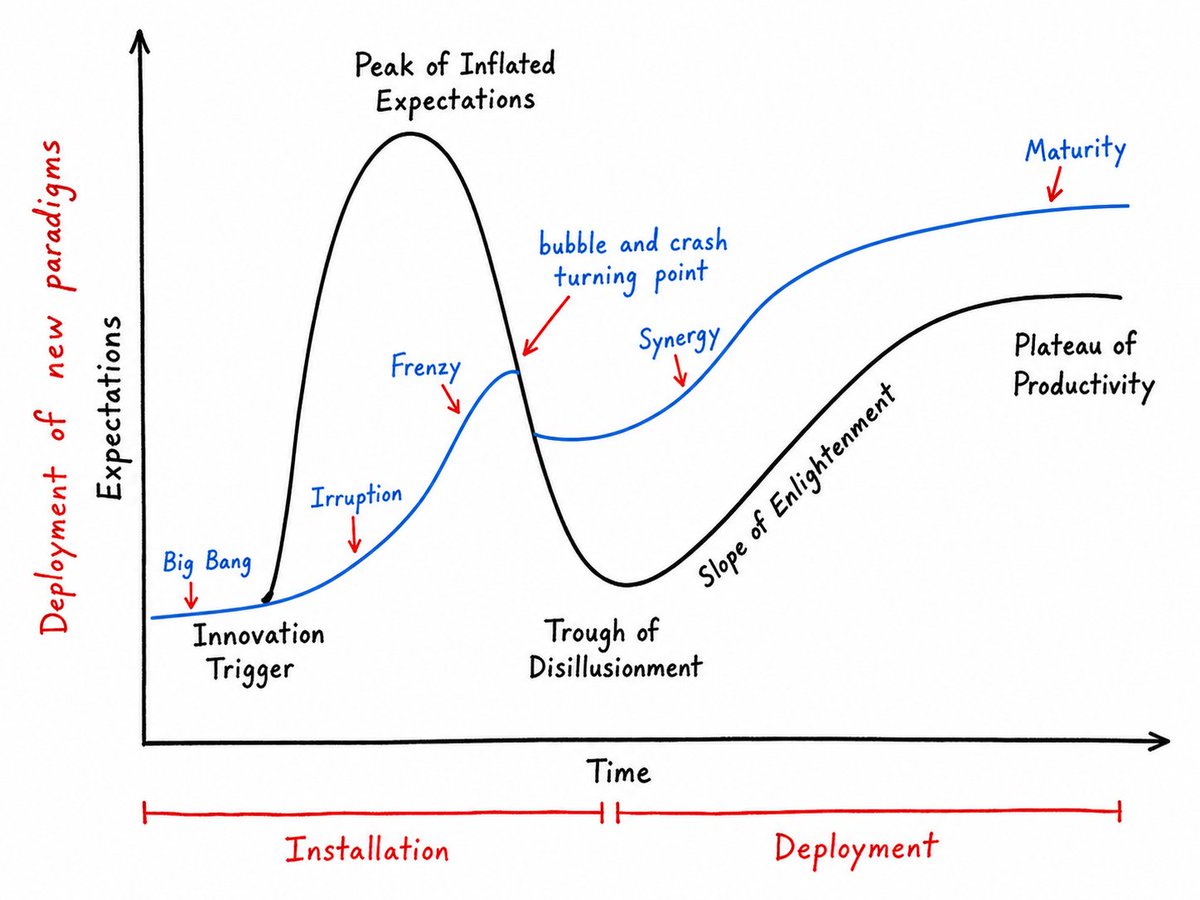
There's no shortage of literature on the anatomy of a technology revolution. It's a pastime of computer-savvy, capitalistic philosophers like Benedict Evans, Geoffrey Moore, Balaji Srinivasan, and my favorite, Carlota Perez. They all contribute a different theory but in reality, it all comes together in one simple framework: 1.
Incubation
- Revolutionaries tinker with fringe ideas sometimes for years on end. 2.
Installation
- A paradigm shift drives a frenzy and then a crash pursuing new opportunities Spark/Irruption - A breakthrough happens when an idea meets the perfect conditions.
Frenzy
- Entrepreneurs and capital rush in pursuing new opportunities unlocked by the paradigm shift.
Crash
- When capital is deployed into the best opportunities, marketing/innovation budgets are exhausted, and experimentation finds its limits, the frenzy ends and mass company extinction ensues. 3.
Deployment
The winners of the revolution reach scale and deploy their products beyond the early adopters.
Incubation
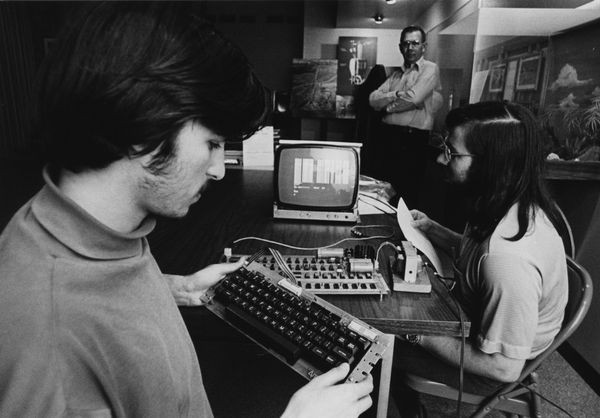
Revolutions always start with the revolutionaries, the microorganisms in the primordial soup of change. In politics they're activists who push for new policy, in society they're artists and public figures who define culture, and in tech they're the tinkerers pushing digital systems to their limit. As they say "if you want to see the future, spend time with your weirdest most technical friend."
Spark
Eventually, the right idea meets the right conditions and it creates a paradigm shift. This is the ah-ha moment that leads to a paradigm shift that powers the revolution. Revolutions begin with one of three kinds of paradigm shifts: Regulatory Shift - A change to the laws like marijuana, stablecoins, and or peptides (soon) Cultural Shift - A change in human behavior at scale like Gen Z entering the workforce, COVID, or political polarization. Technological Shift - A technological breakthrough like the transistor, the iPhone + app store, the Bitcoin whitepaper, or Attention is All You Need + scaling laws.
For technology revolutions, the shift usually begins with the creation of a new tool that dramatically reduces the cost or effort for engineers' to create or distribute high value products. The printing press for making books Interchangeable parts for making guns Digital audio workstations for making music AWS for making websites Stripe for making internet businesses LLMs for making AI products In fact, technology is at its core a force for democratization, making things cheaper or easier to do which allows them to be accessible to more people. .
Frenzy
When valuable products suddenly become significantly cheaper and easier to build, entrepreneurs pour in. Then capital. Then more entrepreneurs and more capital. Like in the Cambrian Explosion millions of years ago, where biodiversity flourished when oxygen suddenly increased in the atmosphere, the range of companies getting started after a spark becomes overwhelming.
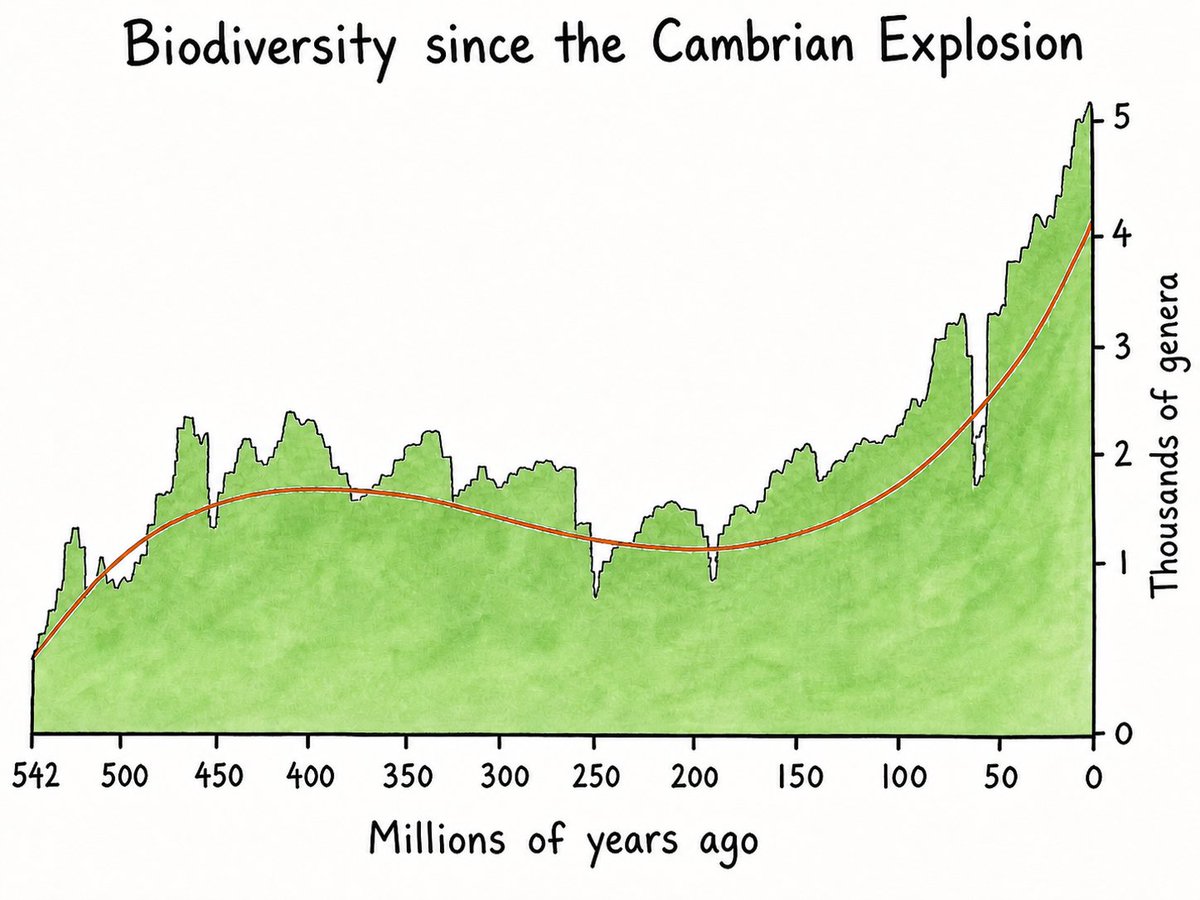
While resources are abundant, companies don't have to optimize their spending. In fact, resource abundance is directly correlated to how exploratory or exploitative any system is, whether it's startups in a bubble, VCs with fresh powder in a bull market, microorganisms in the Cambrian Explosion, or young people with life ahead of them (seeking travel and new friendships). In the frenzy, competition and capital abundance drives bidding wars, expensive marketing campaigns, and other frivolous spending.
Since resources are abundant, companies don't have to optimize their spending - hiring frenzies, x
Competition drives the spending higher and higher. There seems to be a direct correlation with the amount of money startups spend on brand and marketing and the severity of a bubble. If you have to ask, it's probably a bubble.
Crash
At some point, the market is saturated, limitations of the technology are found, enterprise marketing/innovation budgets are spent, the hype dies down and resources start to contract. Years after the Cambrian Explosion when ecosystems matured and competition for resources became more fierce, "pruning" ensued. Less adapted organisms died out. Similarly, companies that are mismanaged or pursuing opportunities propped up by the bubble die and the Revolution reaches maturity.
Deployment
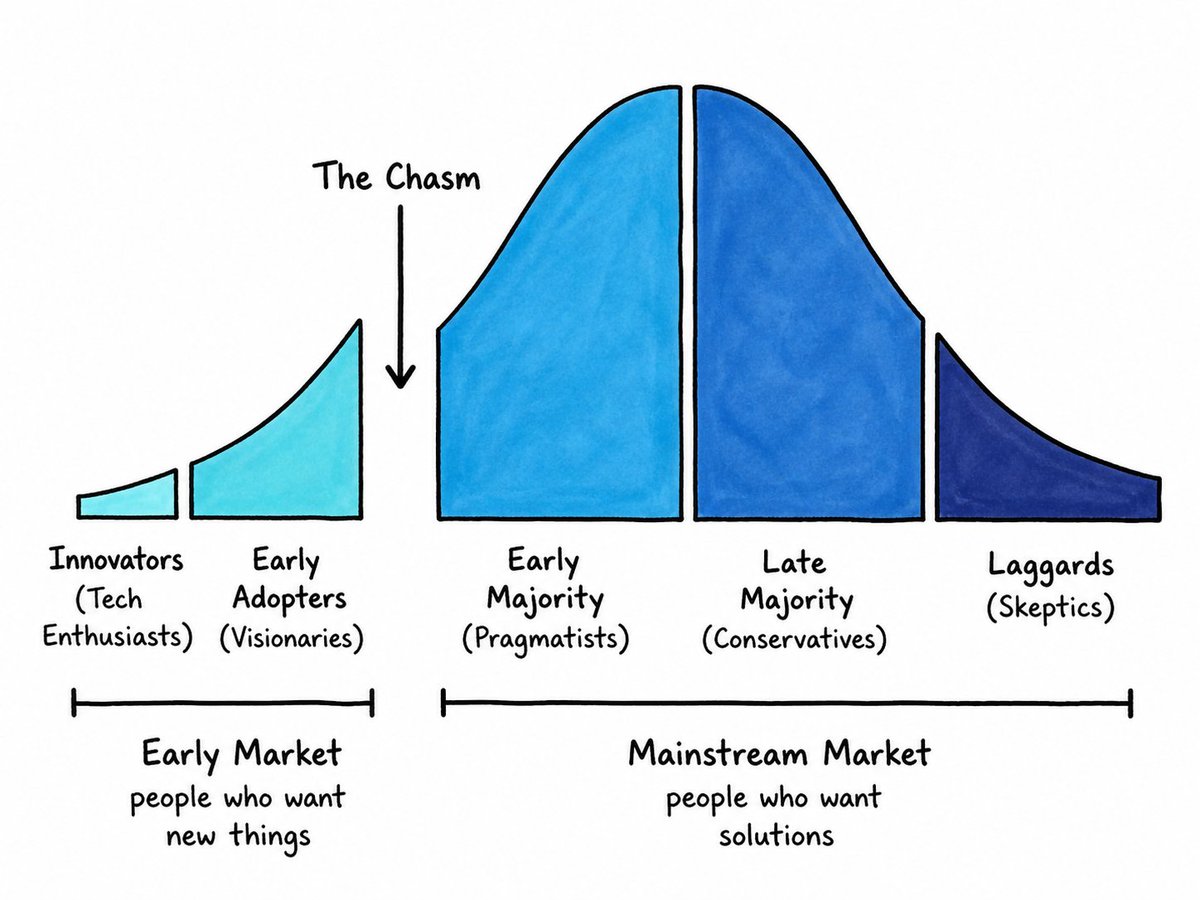
After the crash, the winners consolidate power, their technology gets adopted at scale and moats become insurmountable. The revolution goes corporate and enters the deployment period. Crossing the Chasm Deployment can happen over many years since certain individuals and industries are slower to adopt new paradigms than others. Geoffrey Moore's classic book Crossing the Chasm explains this perfectly: first its the early adopters/tinkerers (younger people and tech companies) and last, the laggards (older people and institutions).
Overlapping Revolutions
Ben Evans showed that revolutions tend to overlap and even catalyze each other.
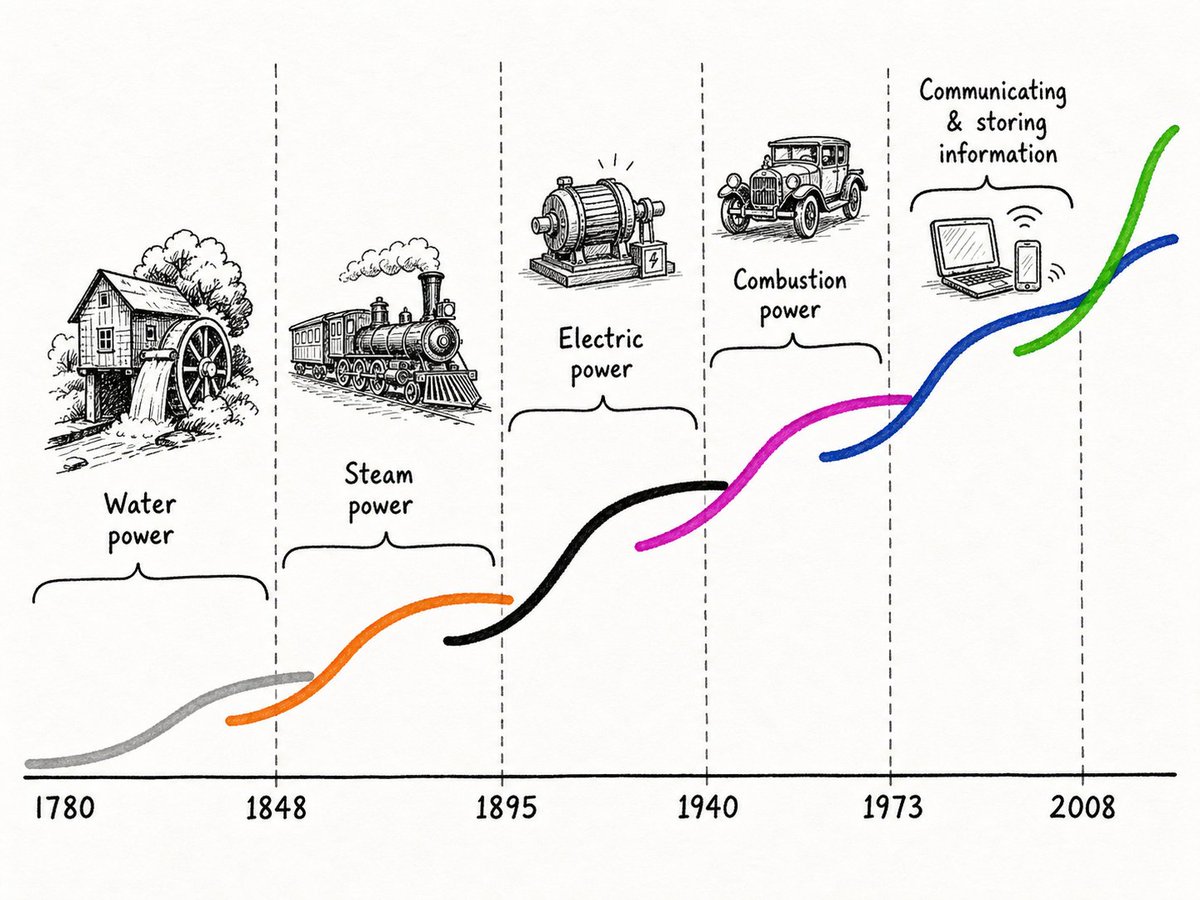
Humanity is a closed loop, so the deployment phase for one revolution creates the conditions for the paradigm shift that sparks the next revolution.
Nested Revolutions
Just as revolutions can feed into each other, there are often multiple revolutions within a single revolution. The internet for example includes major revolutions such as cloud as well as micro-revolutions driven by technologies like AWS and Stripe. I believe the Intelligence Revolution is the same - a collection of four overlapping micro-revolutions that will end in one winner which will be the biggest company in history.
R1 - The Chat Revolution
The first revolution gave the world intelligence that could hold a conversation. OpenAI was the obvious winner, with ChatGPT now at nearly 1 billion weekly users - the most widely used AI chat app of all time. GPT-4 gave developers reliable AI chat which revolutionized industries like therapy, content creation, and more. Unicorns like Copy.ai, Character.ai and Bible Chat emerged built directly on top of the technology.
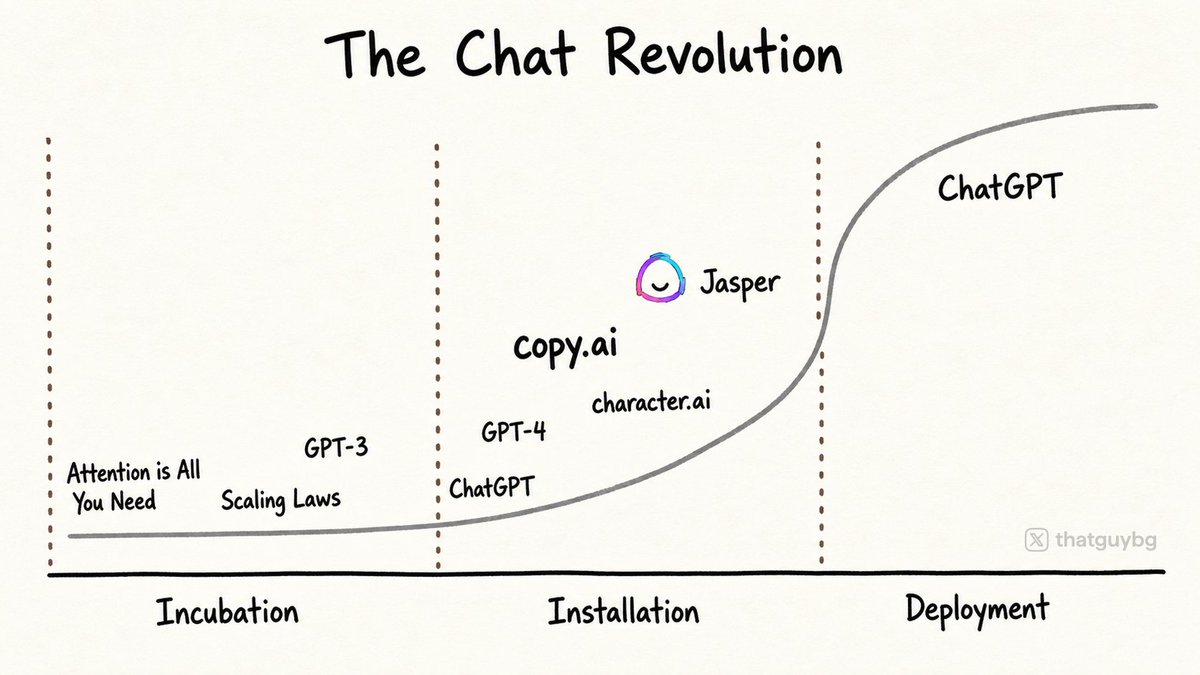
With chatGPT at scale and GPT-4+ in the hands of millions of developers, the AI tinkerers discovered structured output and tool calling, which gave chatbots new abilities.
R2 - The Agentic Revolution
In early 2023, the first examples of structured output allowing chatbots to take actions in external apps (tool calling) drove OpenAI and Anthropic to standardize structured output, tool calling and later MCPs which unleashed the Agentic Revolution. These new capabilities lead to an explosion in agent startups from AI SDRs to customer support agents, with many worth billions today. With the advent of Claude Code, Opus 4.5 and OpenClaw, the capabilities became more reliable and more powerful, which in turn gave rise to even more agent startups.
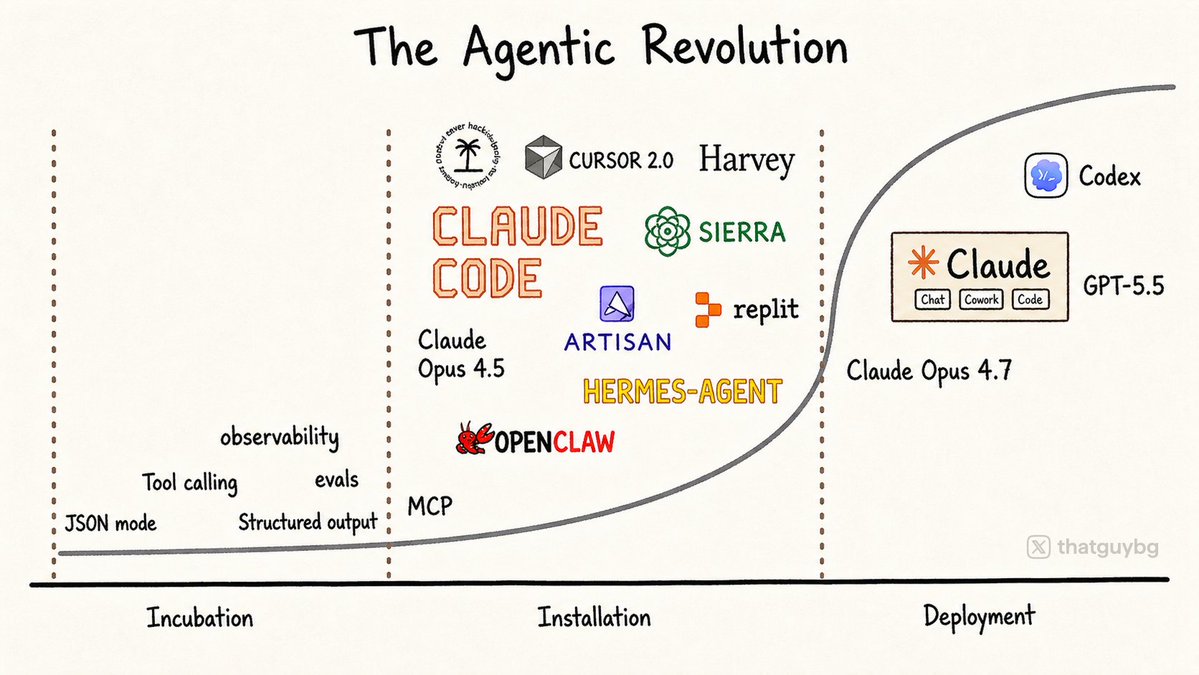
Anthropic has been the clear winner - Claude Cowork/Code is a truly agent native product and the company’s historical earnings growth speaks for itself. Claude has received worldwide attention and has become synonymous with agents. But we are currently at peak frenzy. Half of the latest YC batches are building agent startups, the guys who sold PPE during the pandemic all have AI Psychosis, and there's a 2021-crypto-boom-level energy at OpenClaw meetups around the world. When you're getting texts from your crazy uncle about setting up his Mac Mini and startups are burning $150K on launch videos, you know we're at the top.

The opportunities in the agent revolution are still abundant, but the revolutionaries have already zeroed in on the catalyst for the next major paradigm shift: context. It started with Jaya Gupta and Andrej Karpathy's essays on context/knowledge graphs, Obsidian's viral second brain moment, and Garry Tan's GBrain, and will end in a new revolution.
R3 - The Context Revolution
Before the end of 2026, we will see startups and incumbents like Anthropic and Open AI attempt to standardize the context layer for intelligence in the same way that was done for tool calling and MCP in the Agentic Revolution. It fills an obvious gap. Agents that have context dramatically outperform agents without it. But most importantly, it is the first piece of the AI stack that a moat can be built on top of. Models are interchangeable, but context isn’t (as much). We have seen early attempts at standardization like memory.md or the file system paradigm in general, but these are hacky, incomplete solutions to the context problem.
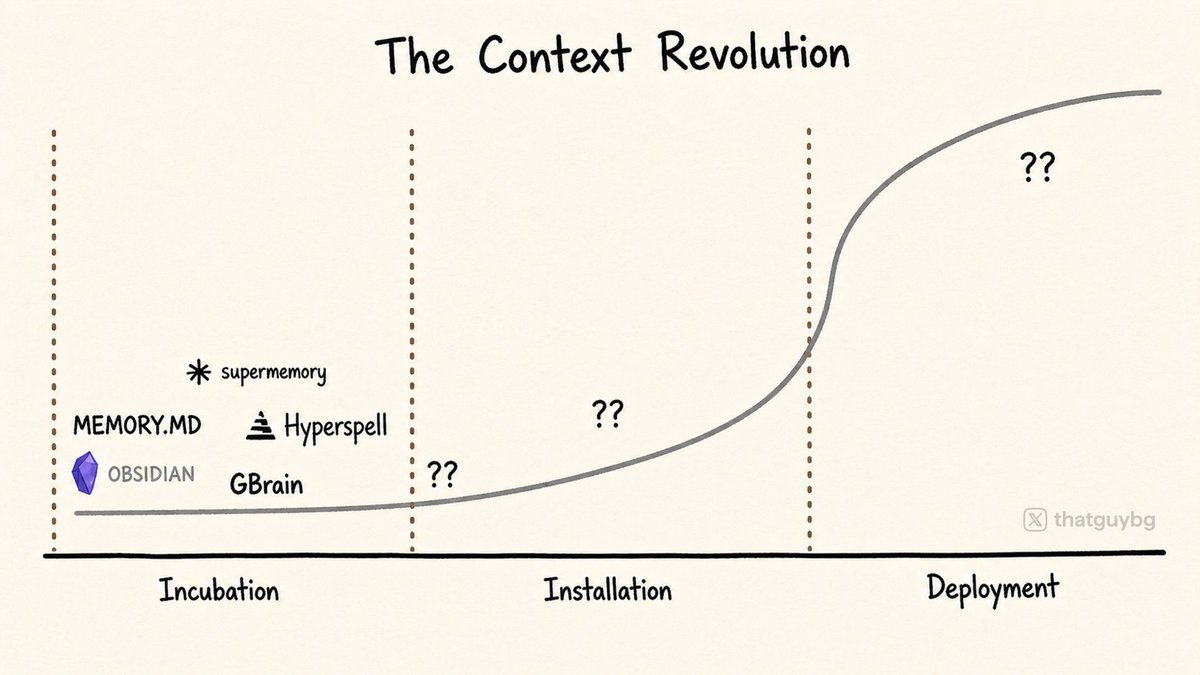
The final primitive, I believe, will be a context/knowledge graph with set entities (like people and companies), relationships, and a handful of tools for searching through and updating information like dreaming, episodic memory, and more. There are many startups (mine included) already building context graphs or company brains as some say, but until the primitive is established, no clear winners can be determined. OpenAI and Anthropic appear to be suspiciously absent, despite having originated the ideas that brought about both the Chat and Agentic revolutions. This time, it's the open source community tinkering with Context. This is actually consistent behavior for incumbents in other technological revolutions.
Winners of previous revolutions tend to be wedded to old paradigms technologically, ideologically or through brand (e.g. Google feels more cloud native than Microsoft). So it’s entirely likely that while Anthropic has clearly won the Agentic Revolution, they may not win the Context Revolution. So who will win? I'll save that for another piece, but whoever does will be set up to win the last revolution and the Intelligence Revolution as a whole.
R4 - The Platform Revolution
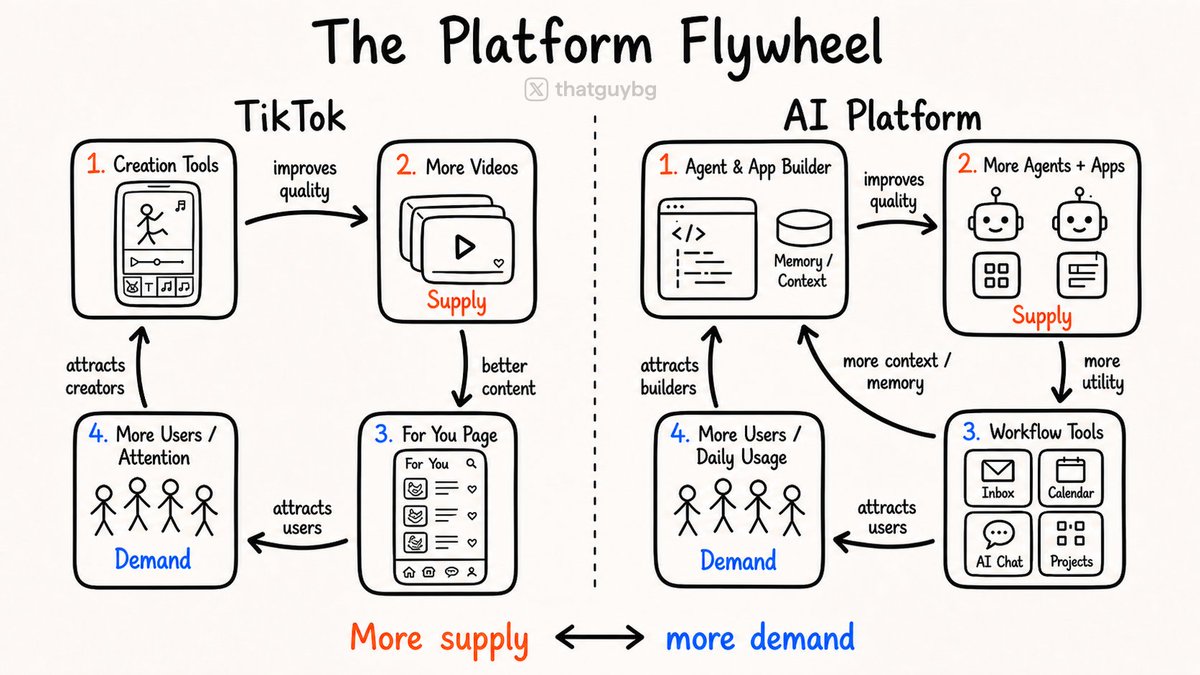
Every major technology cycle eventually produces a platform: a place where other people build, distribute, and monetize products on top of the winning layer. It creates the powerful network effects and virality necessary to reach hyperscale and build a powerful moat. Apple had the App Store. Amazon had the marketplace. TikTok had the creator graph. The Intelligence Revolution will have the same thing. OpenAI tried to create this with custom GPTs and agent builders. Startups have made similar attempts. But these mostly failed because they lacked the two things a platform needs: Tools to create extremely high quality supply (e.g. TikTok's video editor) A place for demand to meet that supply (e.g.
TikTok's For You page) Simply put, GPTs and agents weren't any higher quality or easier to create on chatGPT than elsewhere and chatGPT users didn't really want them. The Context Revolution changes that. When it is deployed, millions of people will have a living database of their most important information: people, companies, conversations, meeting notes, documents, decisions, and more. That database becomes the substrate for a spectacular range of agents and generative apps. The winner of the Context Revolution that owns that substrate simply needs to lean in by: Providing the best tools for creating agents and apps (which is nearly automatic when you own the context layer) Creating a place where users can discover, use, and pay for them.
Today, tinkerers discover agents and generative apps on GitHub, X, and other corners of the internet. It is what Chris Dixon would call a "weak solution" - a hacky under-optimized way to solve a problem.
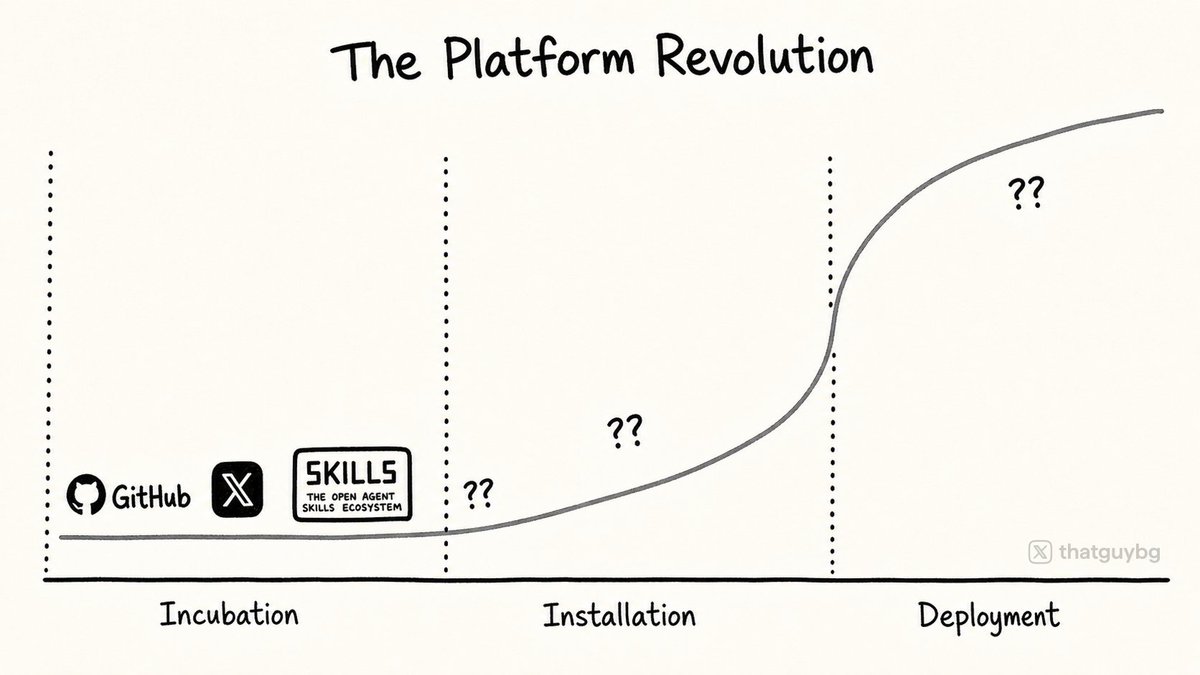
It's a clear cut example of the incubation phase of a revolution where the market is begging for a solution. This is the same transition TikTok went through. Video was taking off on social media platforms designed for text or photos. TikTok launched as the tool to create high quality videos to post on other platforms. But once it aggregated the supply of quality videos, it was able to aggregate demand, transitioning to the best place to consume video as well. And from there the flywheel just keeps spinning.
Here's the logic
Context is sticky and is the backbone of the highest quality agents and generative apps. Whoever wins the Context Revolution is positioned to become the tool for creating the highest quality agents and apps. Whoever becomes the tool for creating the highest quality agents and apps is positioned to become the place for discovering, using, and paying for them. Once a Platform like this is established, it sparks a Platform Revolution where a flurry of new businesses are built on top of it. TikTok drove content businesses Apple's App Store drove mobile app businesses Shopify drove eCommerce businesses But here's where it gets wild. The most powerful platforms become indexes of the markets they aggregate: single proxies for entire categories.
Apple became an index of mobile software. Amazon became an index of e-commerce. Shopify became an index of independent merchants. So what market would a platform for agents and generative apps aggregate? All of them. Whoever becomes the place for discovering, using and paying for agents and apps becomes an index on the AI industry Agents will replace (digital) human labor and generative apps will replace software eventually, so an index on the AI industry becomes an index on all industries that touch a computer today (about 50% of the entire global economy). Of course, it doesn't end there. Marc Andreessen said "software is eating the world" in 2011 and now AI is eating software.

As software and agents get easier to create and humanoid robots scale to production, more and more of the physical economy will become digitized and consumed by AI. This is why the winner of the Context Revolution and then the Platform Revolution will likely be the most valuable company of all time. There are some early signals of who this may be, but the Context Revolution has barely just begun, so the title is still up for grabs.
My company, Micro is a bet to win the Context Revolution and all of the strategic decisions we've made thus far have been driven by an unconscious understanding of the ideas presented in this piece. I wrote this as a map for myself and founders like me to be able to make even better decisions in such a chaotic moment in history. Thanks to Isabel Swope, Ravi Mishra, and Saul Carlin for edits and conversations.